Probiotics:
Beneficial Bacteria: Probiotics, such as Lactobacillus and Bifidobacterium strains, may restore a healthy balance of gut bacteria. Unpasteurised yoghurt, kefir, and fermented foods are natural sources. Probiotics supplements are necessary when reducing fermented carbohydrates for IBS conditions.
Herbal remedies:
Peppermint: Known for its antispasmodic properties, peppermint may help ease abdominal pain, cramps and bloating. Use capsule supplementation and herbal tea infusion.
Aloe Vera: Aloe vera gel may have anti-inflammatory effects, soothing the intestinal lining.
Stress Management:
Mind-Body Practices: techniques such as yoga, meditation, and deep breathing can help manage stress and positively impact the gut-brain axis.
Exercise:
Regular aerobic physical activity may reduce IBS symptoms by reducing inflammatory biomarkers and increasing anti-inflammatory and antioxidant parameters. In addition, regular exercise promotes overall well-being and contributes to improved mental health and gut function.
Hydration:
Adequate Water Intake: Staying well-hydrated is crucial for maintaining optimal digestive function and minimising black tea and coffee for their diuretic properties.
Identifying your food triggers:
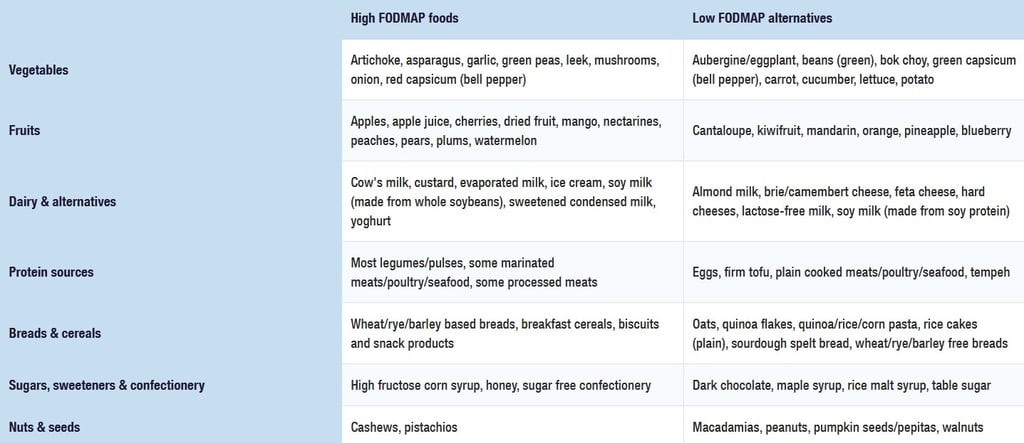
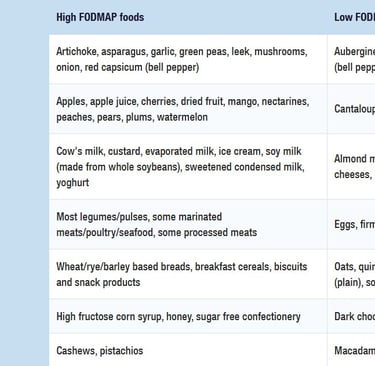
Food diary or list: Keeping a food diary helps identify specific foods that may trigger symptoms, allowing for personalised dietary adjustments. You can keep a list of ingredients in your kitchen displayed on a board, or images of low FODMAP foods for example.
Gut-Healing nutrients:
Glutamine is an amino acid that supports the integrity of the intestinal lining. It can be found in any protein source: animals, eggs, nuts, seeds, tofu, spinach, and cabbage, or as a supplement for a few periods.
Omega-3 Fatty Acids: In fatty fish, flaxseeds, and walnuts. Omega-3s may have anti-inflammatory effects and benefit on intestinale mucosal healing.